Already A Member? Sign In
Steering is one of the most important control skills in advanced riding. It affects the rider’s line through bends, ability to avoid hazards, confidence in direction changes and capacity to keep the motorcycle accurately positioned on the road.
Many riders think steering is simply a matter of turning the handlebars, but on a motorcycle it is more involved than that. At normal riding speeds, steering is linked to vision, bar input, lean angle, throttle control and the rider’s ability to stay relaxed.
A well-steered motorcycle looks settled and accurate. The rider chooses a line, gives the correct input, allows the machine to lean, and keeps it on course without fighting the handlebars. Poor steering often looks untidy. The rider may drift wide, make late corrections, tense the arms or rely on body movement rather than clear control input.
Advanced riders should be able to steer with accuracy and confidence, using controlled pressure through the handlebars rather than trying to manhandle the motorcycle.
At very low speeds, such as walking pace manoeuvres, the rider can steer more directly by turning the handlebars in the direction they want to travel. This is why slow manoeuvring feels different from normal road riding.
As speed increases, the motorcycle becomes more stable and steering works differently. The rider no longer simply turns the bars into the bend. Instead, they use controlled bar pressure to initiate lean and guide the motorcycle onto the chosen line.
The important point for riders is practical rather than technical. At low speed, the bars visibly turn more in the direction of travel. At normal riding speeds, the rider should use smooth, deliberate pressure on the handlebars to start and control the turn.
This should feel light and accurate, the rider is not wrestling the bike into position. They are giving the motorcycle the correct instruction and allowing it to respond.
Counter-steering is the normal way a motorcycle is steered once speed increases. In simple terms, to go left, the rider applies gentle forward pressure to the left handlebar. To go right, the rider applies gentle forward pressure to the right handlebar. This input causes the motorcycle to lean in the direction the rider wants to turn.
It can sound strange when first explained, but most riders already do it without realising. The difference at advanced level is that the rider becomes aware of it and uses it deliberately.
Counter-steering should not be aggressive. It is not a shove, wrestle or sudden jab at the bars. It is smooth, accurate pressure applied at the right time. The amount of pressure depends on speed, bend shape, road position, view and how quickly the motorcycle needs to change direction.
Good counter-steering gives the rider control. It allows the motorcycle to lean accurately and follow the intended line. It also helps the rider make small adjustments without upsetting the bike.
Steering input creates lean, and lean allows the motorcycle to follow the curve of the road. This is why steering is directly linked to line and position choice.
A rider who steers accurately can place the motorcycle where they want it, hold the correct line and stay on their own side of the road. This is especially important through bends, where poor steering can easily lead to drifting wide.
Good steering begins with vision. The rider should look where they want the motorcycle to go, not at the kerb, centre line, pothole or oncoming vehicle. The motorcycle tends to follow the rider’s eyes, so poor vision often leads to poor steering (called target fixation).
The rider should combine vision with relaxed arms and clear bar input. If the upper body is tense, the rider may resist the motorcycle’s natural movement or accidentally add unwanted input to the bars. Steering should feel deliberate, not forced.
Drifting wide through a bend is one of the clearest signs that the rider’s steering plan is not working.
This can happen for several reasons. The rider may have entered too quickly, looked in the wrong place, used weak or late steering input, or become tense through the arms. In some cases, the rider may lean their body the wrong way, lock their arms, or apply power too early, causing the motorcycle to lift and run wider than intended.
A common problem is running out of steering input. The rider has not asked the motorcycle to lean enough, and by the time they realise the line is going wide, they are already under pressure.
The answer is not to panic or wrestle the bike. The rider should improve the approach. Better vision, correct speed, relaxed arms and positive bar input allow the motorcycle to turn accurately and stay on line.
You should aim to steer early enough and accurately enough that they are not making desperate corrections halfway through a bend. You should be aiming for one steering input for the corner you are in.
Good steering control also matters when the rider needs to avoid something suddenly.
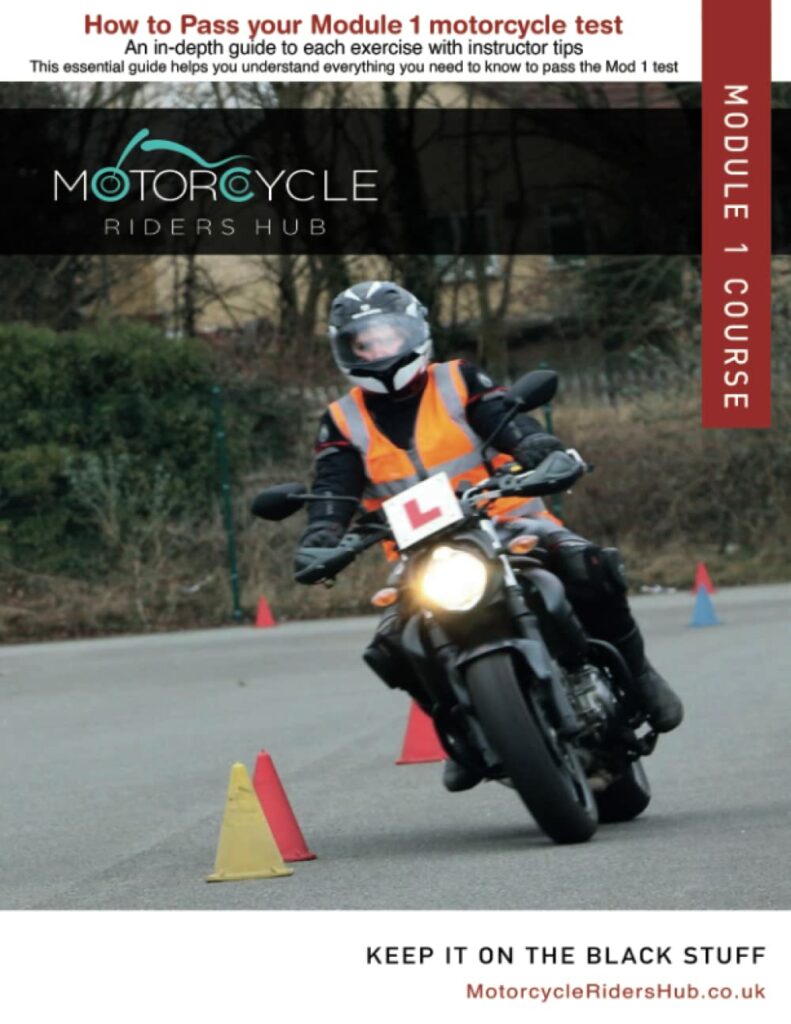
The avoidance exercise in the Module 1 motorcycle test is a simple example of this skill. The rider must make a quick, controlled direction change and then recover the motorcycle safely. The same principle applies on the road if the rider needs to avoid a vehicle moving into their path unexpectedly.
However, emergency steering should be a get-out clause, not the main plan. Advanced riding is built on observation, anticipation and planning. The better the rider reads the road, the less often they should need a sudden avoidance manoeuvre.
That said, the skill still matters. A rider who understands bar pressure and counter-steering is better prepared to make a quick, accurate change of direction if there is no other option.
Common Faults Riders Make
Many of the steering problems arise from excessive speed and not enough knowledge and understanding. Practising this skill with coaching is the best way to develop and improve.
Some riders try to turn the motorcycle by leaning their body without giving a clear handlebar input. Body position can influence balance, but it does not replace steering. The motorcycle needs a clear, controlled input through the bars.
Weak or late steering input can cause the rider to drift wide, miss the intended line or make rushed corrections (including braking mid-bend). The rider should steer early enough and positively enough to place the motorcycle accurately.
Tension through the arms and shoulders makes steering harder. Target fixation makes it worse. If the rider stares at the hazard, kerb or centre line, they are more likely to steer towards it. Relaxed arms and good vision are essential.
Developing better steering control starts with awareness. The rider should notice how the motorcycle responds to small, deliberate bar inputs. The aim is to understand how little pressure is often needed when the input is well timed.
A useful exercise is to focus on bends at a calm pace. Look through the bend, stay relaxed, set the correct speed, and apply smooth pressure to the inside bar to guide the motorcycle onto the chosen line. The rider should feel the machine lean and settle, rather than being forced or dragged through the turn.
This skill should be practised gradually. The aim is not to flick the motorcycle aggressively from side to side. It is to build confidence that the bike will respond accurately to smooth, deliberate input.
Good steering is quiet and controlled. The best riders do not look as though they are fighting the motorcycle. They look as though they are guiding it, use both hands when using counter-steering. If the left hand is pushing down and forward, the right hand is lifting up and back.
On your next ride, reflect on how you steer and ask yourself:
Improving steering control will make your riding more accurate, more confident and more controlled. It will also help you stay on your own side of the road, manage bends more effectively and respond better if an avoidance manoeuvre is ever needed.





Sorry. You must be logged in to view this form.
Unsure about diving into a course? Try it out for free!