Already A Member? Sign In
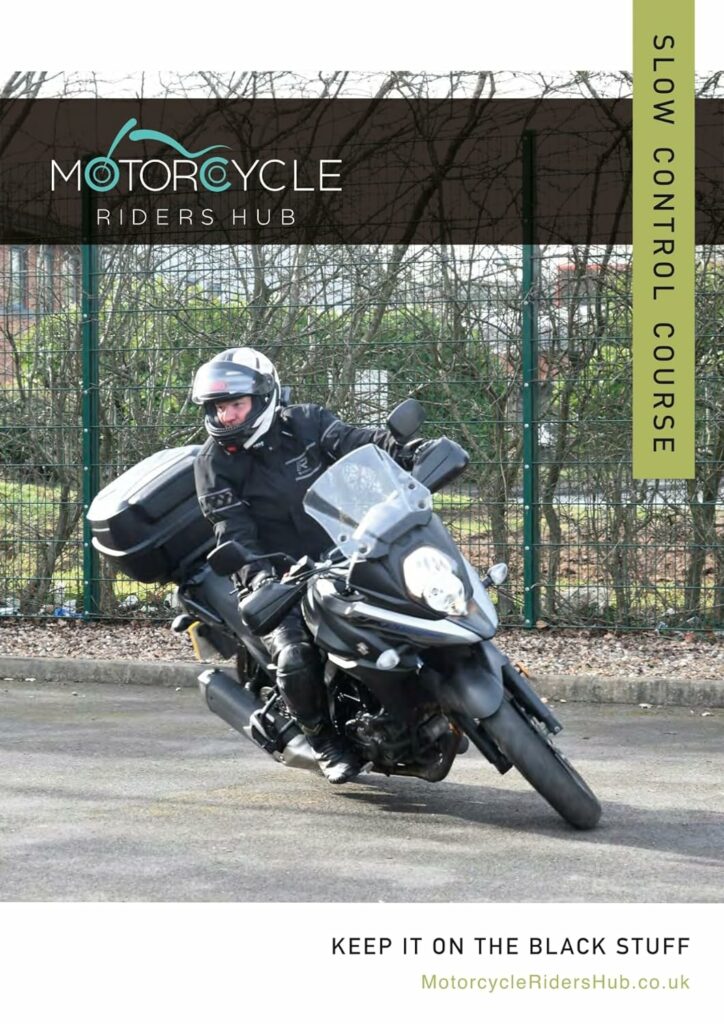
Slow manoeuvring is one of the clearest tests of motorcycle control. It shows whether the rider can manage balance, clutch control, throttle, rear brake, vision and body position without relying on speed to create stability.
Many riders are comfortable once the motorcycle is moving at normal road speed, but struggle when the pace drops. This is where weaknesses often appear. Tight turns, slow traffic, petrol stations, car parks, junctions, U-turns and parking areas can all expose a lack of control.
Advanced riders should be in control of the motorcycle at all times, not only when riding quickly. A rider who can handle the motorcycle calmly at walking pace or slower shows a high level of feel and confidence.
Riding quickly may impress some people, but watching a rider control a motorcycle precisely at very low speed often shows far more skill.
There is a common myth that a rider’s ability is measured by how fast they ride. That is not true. Not everyone is capable of riding quickly, but the faster you go, the higher the risk.
Speed can hide poor technique. At higher speeds, the motorcycle naturally feels more stable, and some riders mistake that stability for skill. At slow speed, there is less momentum helping the rider, so control becomes more obvious.
Slow manoeuvring requires patience, feel and coordination. The rider must control the motorcycle without rushing, grabbing or overreacting. This takes discipline and time to perfect.
A good slow-speed rider looks calm. Their head is up, the motorcycle keeps moving, the controls are used lightly, and there is no sense of panic. That level of control is a strong sign of an advanced rider.
Motorcycles are generally more stable when they are moving. At very low speed, that natural stability is reduced, so the rider has to create control through good technique.
The aim is to keep the motorcycle moving smoothly while managing balance. If the rider stops the bike at the wrong moment, especially when the handlebars are turned or the motorcycle is leaning, the risk of putting a foot down or dropping the bike increases.
Momentum is helpful, but it must be controlled. Too little movement can make the motorcycle unstable. Too much speed can make the manoeuvre rushed or inaccurate. The skill is finding the balance between movement and control. The rider should keep the bike alive beneath them, using the controls with feel rather than force.
At walking pace, the coordination of clutch, throttle and rear brake becomes very important. A steady throttle gives the engine consistency. The clutch controls how much drive reaches the rear wheel. The rear brake can then be used lightly to support stability and control speed.
This does not mean using excessive revs, slipping the clutch heavily and dragging the rear brake against it. That is noisy, inefficient and unrefined. It can make the controls feel as though they are working against each other rather than together.
Advanced slow control should be delicate and measured. The rider should use only enough throttle to keep the engine settled so that it doesn’t stall, enough clutch to control drive, and rear brake only to slow the motorcycle’s speed when needed.
The front brake should not be used at low speeds. Abrupt use of the front brake, especially with the bars turned or the motorcycle leaning, can quickly destabilise the bike.
Good slow manoeuvring starts with the head and eyes. The rider should keep their head up and look where they want the motorcycle to go. Looking down at the front wheel, the kerb or the ground usually makes balance worse. The motorcycle tends to follow the rider’s eyes, so poor vision often leads to poor control.
Relaxation also matters a great deal. Tension through the arms and shoulders makes the motorcycle harder to steer and balance. A rider who grips the bars too tightly may fight the bike rather than guide it.
The upper body should remain calm, the hands should be light, and the rider should allow the motorcycle to move beneath them. Balance improves when the rider stops trying to hold the bike rigidly upright and starts guiding it smoothly.
Slow manoeuvring is not just a training exercise. It is used constantly in real riding. Filtering through slow traffic, turning in narrow roads, moving through petrol stations, entering parking spaces, dealing with tight junctions and riding in busy town centres all require slow control.
Poor slow control can lead to dropped bikes, rushed decisions and unnecessary stress. It can also affect other road users if the rider wobbles, stalls or needs more space than expected.
An advanced rider should be able to manage these situations calmly. They should keep the motorcycle balanced, maintain awareness of the surroundings and use the controls smoothly enough that the manoeuvre appears planned rather than lucky.
Slow manoeuvring also includes handling the motorcycle when the engine is off. Pushing the bike, parking it, turning it around, moving it on a slope or using a centre stand all require an understanding of balance and weight. Many motorcycles are dropped during manual handling rather than while being ridden.
The rider should take time, think about the surface, keep the bike balanced and avoid putting themselves in a weak position. Manual handling is not riding slow control, but it is still motorcycle control. A rider who understands the weight and balance of their machine is less likely to be caught out when moving it in tight spaces.
Many motorcycles are dropped because of poor planning, at slower speeds when approaching a junction riders tend to look to the right, whilst steering to the left. When they find they cannot go, they jab the front brake on, this results in the bike falling over.
Looking down reduces balance and control. Riders who stare at the front wheel, kerb or ground often become tense and reactive. The head should stay up, with the eyes looking where the motorcycle needs to go.
Some riders allow the motorcycle to surge, stall or stop at the wrong moment because the controls are not working together. The throttle should be steady, the clutch should control drive, and the rear brake should be used lightly where needed.
Using too many revs, excessive clutch slip and heavy rear brake pressure is not refined slow control. It creates noise without showing real feel. Advanced riding should look delicate and controlled, not forced.
Improving slow manoeuvring requires practice. It is not enough to hope it will improve during normal riding, because many riders avoid slow-speed situations wherever possible.
A safe, open area is useful for practice. The rider can work on moving at walking pace, turning tightly, stopping and starting smoothly, and controlling the motorcycle without looking down.
The aim is not to make the exercise dramatic, it is to make it calm. Small improvements in clutch feel, throttle steadiness, rear brake control and vision can make a large difference. Riders should practise little and often. Slow control improves when the rider becomes familiar with the motorcycle’s weight, balance and response.
On your next ride, reflect on your slow manoeuvring and ask yourself:
Improving slow manoeuvring will make you a more confident and controlled rider. It will also reduce the risk of dropped bikes, poor balance and rushed decisions in the places where many riders struggle most.





Sorry. You must be logged in to view this form.
Unsure about diving into a course? Try it out for free!