Already A Member? Sign In
Acceleration sense, often referred to as throttle sense, is the ability to control the motorcycle’s speed smoothly and precisely using the throttle. It is a defining skill in advanced riding because it directly affects stability, control and the overall flow of the ride.
A rider with good throttle control is able to match speed accurately to changing road and traffic conditions without relying on unnecessary braking. In contrast, constant “comfort braking” or pulsing the throttle (constant on and off action) are clear signs that acceleration sense is not being used effectively.
Good throttle control creates a settled motorcycle, whereas poor throttle control creates instability. This is why it plays such an important role in rider safety and control.
Acceleration sense sits within the final phase of IPSGA, but it is influenced by everything that comes before it.
If Information has been gathered correctly, Position selected appropriately and Speed set early, then Acceleration becomes smooth and controlled. If those earlier phases are weak, the rider may find themselves using the throttle or brakes to compensate for poor planning.
Acceleration should support the plan, not correct it. This is where advanced riding becomes refined. The rider is no longer reacting, but applying the throttle deliberately to maintain control and flow.
Throttle control is not just about increasing speed. It directly influences the stability and balance of the motorcycle by creating a constant pull to maintain drive at the same speed.
Smooth and progressive throttle application keeps the motorcycle settled, particularly when moving between hazards or exiting bends. Abrupt or inconsistent inputs can unsettle the machine, affecting grip and control.
The way the throttle is used sets the tone of the motorcycle. A light grip, relaxed posture and delicate control allow the rider to make fine adjustments without disturbing the balance of the bike. This level of finesse is what separates smooth, controlled riding from abrupt and reactive riding.
One of the key benefits of good acceleration sense is the reduced reliance on braking. Braking mid hazard, mid corner or because of excessive speed means the Information phase wasn’t correct.
When speed is planned early and adjusted progressively, the rider can maintain a consistent and appropriate pace using the throttle alone. This avoids unnecessary braking and creates a smoother, more stable ride.
Braking still has its place, particularly when reducing speed significantly, but it should not be used to repeatedly correct poor throttle control. Whilst cornering the throttle can control the bike’s position, as speed is reduced a tighter line may be used and if acceleration is used the bike would move to a wider arc.
A rider who is constantly braking and accelerating is often reacting rather than planning. Good throttle use removes this cycle.
Acceleration sense applies across all riding conditions, but its role varies with speed.
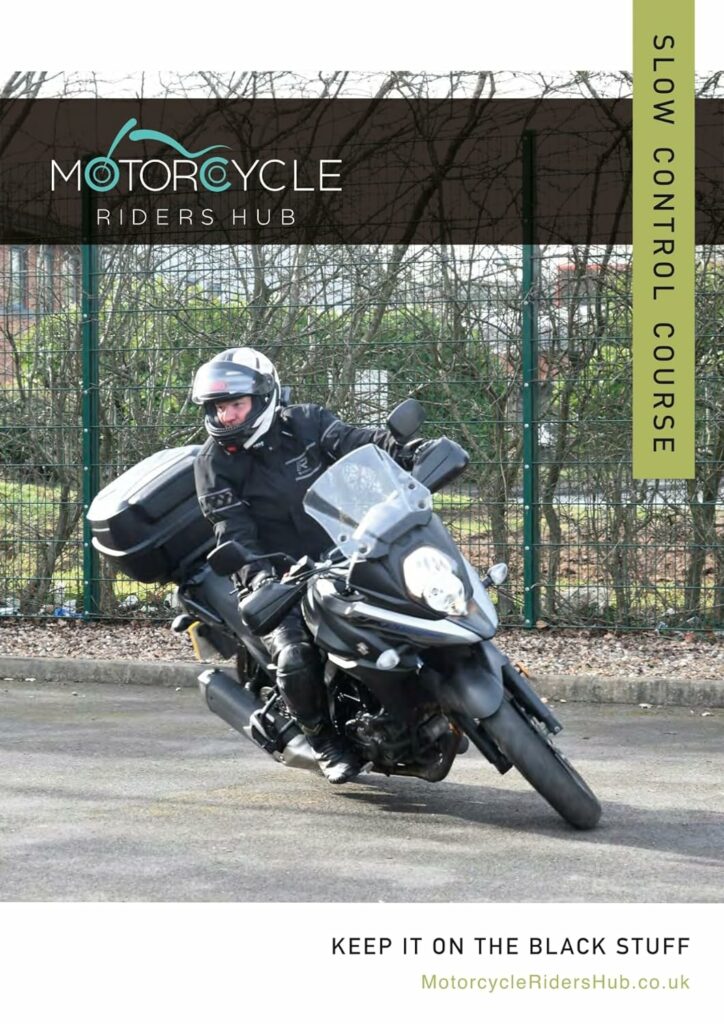
At low speed, particularly in first gear, throttle control works closely with clutch control to maintain balance and stability. Fine adjustments allow the rider to move smoothly without needing to put a foot down unnecessarily, in this instance the throttle stops the engine from stalling.
At higher speeds, the focus shifts to smoothness and consistency. The rider uses the throttle to maintain a steady pace, adjust speed gradually and respond to changes in traffic or road conditions without abrupt inputs.
In both cases, the principle remains the same. Control is achieved through small, deliberate adjustments rather than large or sudden movements. Use the throttle more like a dimmer switch rather than an on/off switch.
Good throttle sense develops through an understanding of how the motorcycle responds. The rider becomes aware of how much input is required to maintain or adjust speed, and how those inputs affect the behaviour of the bike.
This is not about watching instruments or overthinking the process, but about developing a natural feel for the machine. Experience plays a role here, but it must be supported by conscious attention.
Even simple exercises, such as practising smooth acceleration and deceleration on a quiet, flat road or open space, can help refine this control. The aim is always the same, smoothness, stability and consistency.
There are several common faults that reduce the effectiveness of acceleration sense. Time is your friend when learning new techniques and throttle sense becomes better with coaching and constant practice.
Using the brakes repeatedly to manage speed often indicates poor planning and weak throttle control.
Sudden changes in throttle can unsettle the motorcycle and reduce stability. It may also contribute to target fixation when riding too quickly in hazards.
Applying excessive throttle to recover from a poorly judged situation increases risk and reduces control. This is often seen during cornering when a rider feels they are riding too slow in a group.
Each of these faults disrupts the smooth and controlled flow that advanced riding requires.
Acceleration sense brings together control, planning and smoothness.
When used correctly, it allows the rider to maintain a steady and appropriate speed, respond to changing conditions and keep the motorcycle balanced and predictable.
It is not about riding faster or about riding better, it is about refinement replacing effort.
On your next ride, reflect on how you use the throttle and ask yourself:
Improving these areas will have a direct impact on your safety, your planning and your overall control of the motorcycle.







Sorry. You must be logged in to view this form.
Unsure about diving into a course? Try it out for free!